
Adding an animal takes about thirty seconds. Only one field is compulsory.
Getting to the form
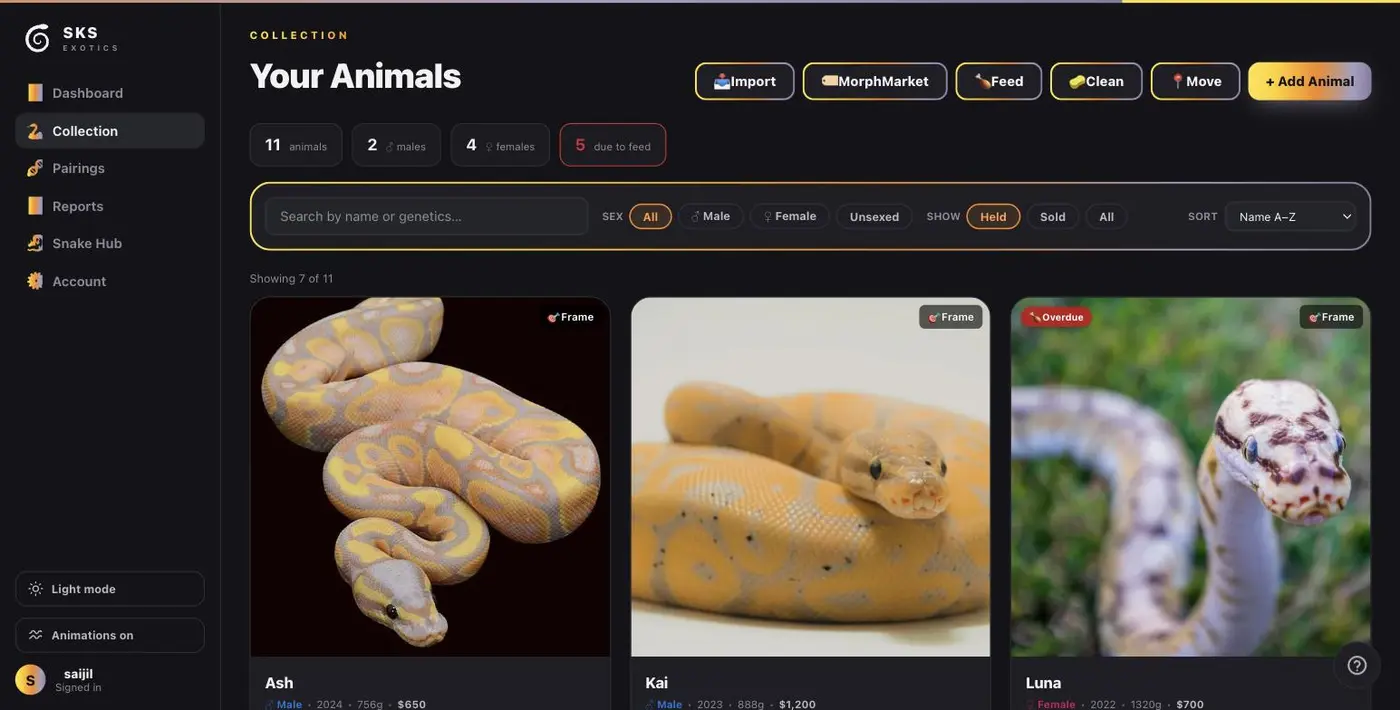
Open Collection from the sidebar and press + Add Animal at the top right.
The form
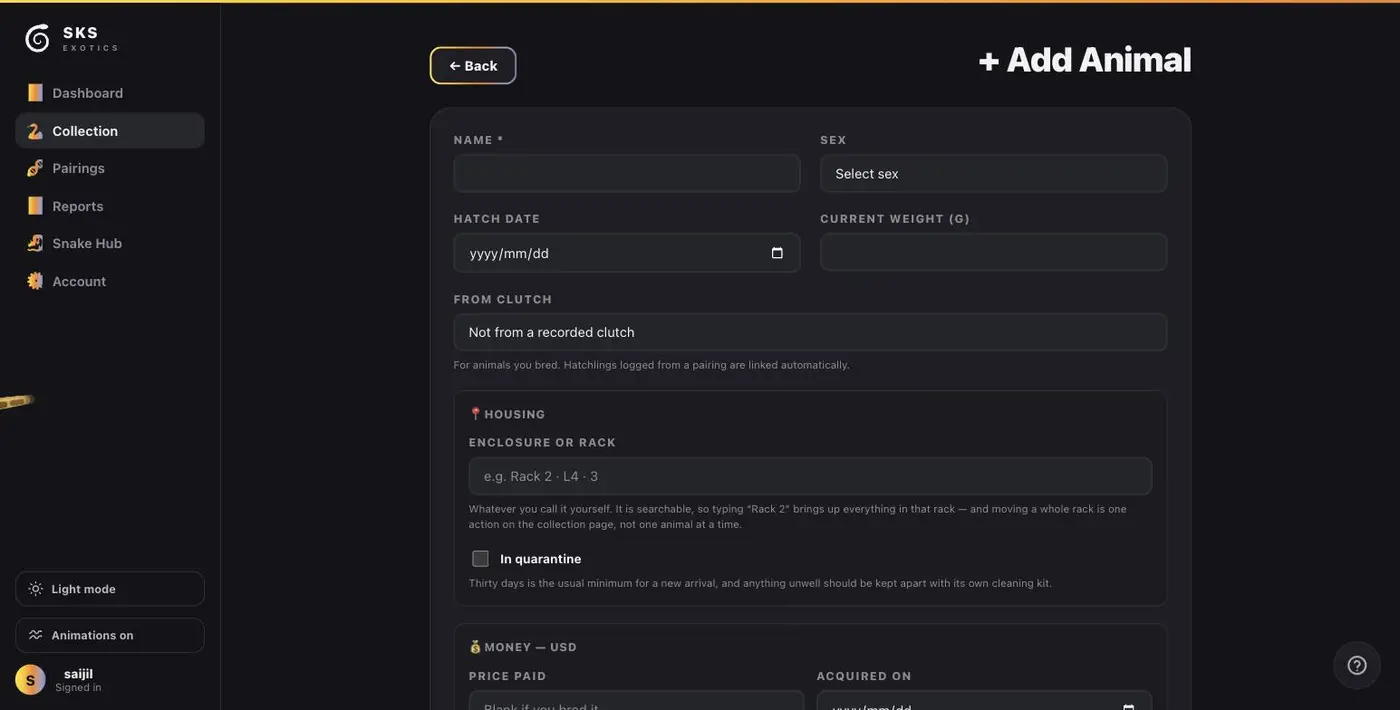
- 1. Name — the only required field. Use whatever you actually call the animal. You can rename it at any time, and hatchlings logged from a pairing can be renamed later without losing their parentage.
- 2. Sex — leave it as Unsexed if you are not certain. It matters later, because pairings only offer males in the sire list and females in the dam list.
- 3. Hatch date — drives the age shown on the animal's profile and in reports.
- 4. Current weight (g) — becomes the first point on the growth curve. Add more later from the animal's page and the curve draws itself.
- 5. From clutch — only for animals you bred. Hatchlings logged from a pairing are linked automatically, so most people leave this alone.
Housing, money and genetics
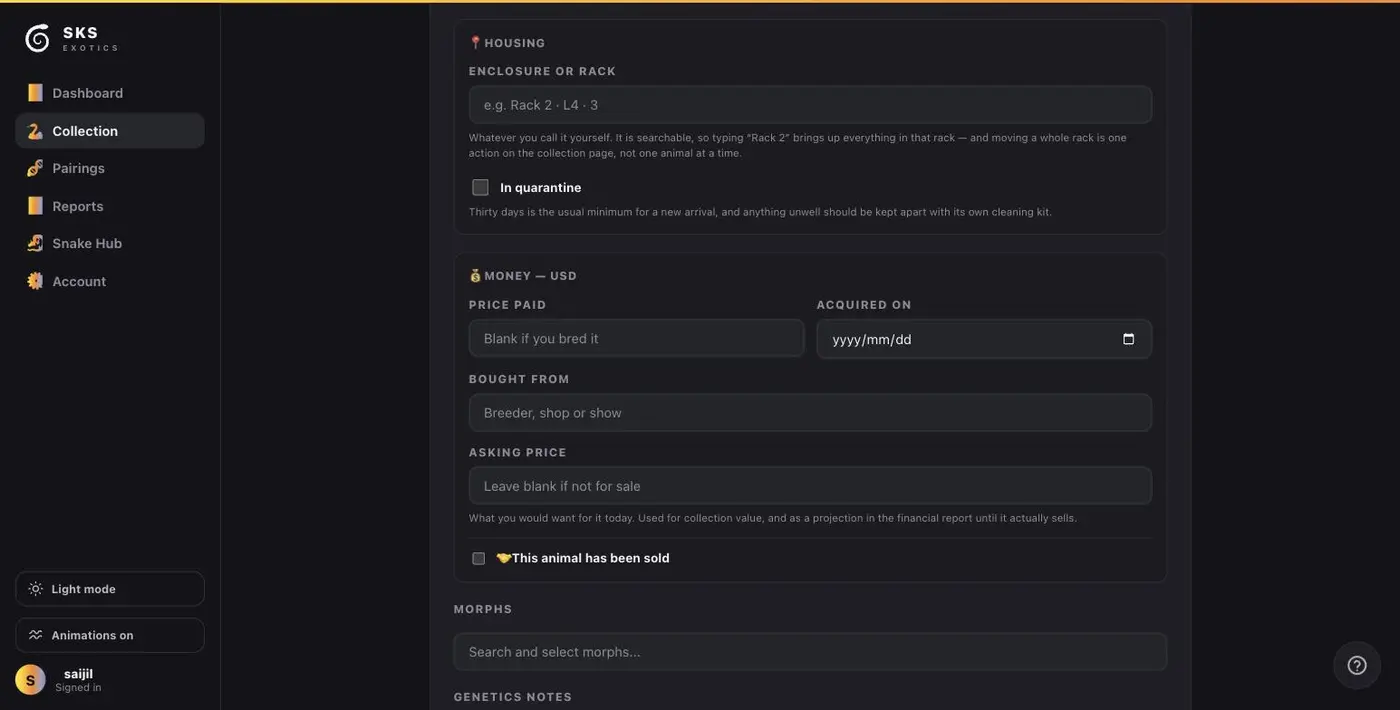
- Enclosure or rack — whatever you call it yourself. It is searchable, so typing "Rack 2" later brings up everything in that rack, and moving a whole rack is one action on the collection page rather than one animal at a time.
- In quarantine — worth ticking for a new arrival. Thirty days is the usual minimum.
- Price paid and Acquired on — leave the price blank if you bred it. These feed the financial report; without them, an animal costs nothing on paper and your margins look better than they are.
- Asking price — what you would want for it today. Used for collection value and as a projection until it actually sells.
- Morphs — search and select. This is what the genetics calculator reads when you pair the animal, so it is worth being accurate. Het and possible-het traits are entered here too.
Saving
Save animal finishes. Save & add another keeps the form open with the housing and money fields as you left them — much faster when you are entering a whole rack or a clutch in one sitting.
The four fields that pay for themselves later are sex, hatch date, weight and morphs. Everything else can wait.